
Dry Eyes at Night: Why It Happens and How to Get Relief
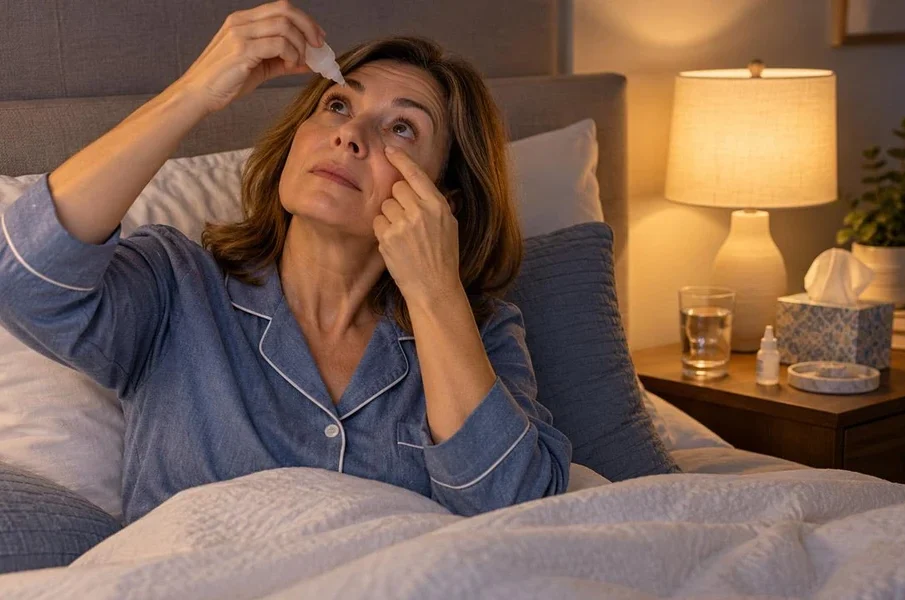
While you sleep, you stop blinking, and your eyes make fewer tears. If your eyelids leave a small gap, your CPAP mask leaks, or your bedroom air is dry, your eyes can be parched by morning. Bedtime gels or ointments, added humidity, redirected fans, and a better mask fit often help mild cases. If symptoms keep coming back or include pain or vision changes, an eye exam can find the real cause.
You wake up, open your eyes, and they feel like sandpaper. It takes ten minutes of blinking before the room comes into focus. If that sounds familiar, you may be dealing with dry eyes at night, a common problem that often shows up most clearly first thing in the morning.
You’re far from alone. The National Eye Institute estimates that nearly 16.4 million Americans have dry eye. The reassuring news is that nighttime dryness usually has an identifiable cause, from a ceiling fan over your pillow to eyelids that don’t fully close while you sleep. Some causes are easy to fix at home, while others are hard to spot on your own, like a sleep apnea mask that leaks air toward your eyes.
At Anaheim Eye Institute, our team has cared for Orange County patients since 1958. Below, we explain why eyes dry out overnight, what you can try tonight, and when to see an eye doctor.
Why Do I Get Dry Eyes at Night?
Quick take: Sleep naturally slows tear production and stops blinking, so any extra source of drying has more time to affect the surface of your eyes.
Tears form a thin, layered film of water, oil, and mucus that keeps the front of the eye smooth. The TFOS Dry Eye Workshop II report describes dry eye as a loss of that film’s normal balance, leading to instability, irritation, and inflammation.
At night, a few things work against that balance:
- You don’t blink, so tears aren’t spread and refreshed across the eye.
- Tear production naturally slows while you sleep.
- Any air movement or lid gap has hours to evaporate moisture.
Dry eye is often grouped into two types: evaporative, where tears evaporate too quickly because the oil layer is thin, and aqueous-deficient, where the eyes don’t make enough tears. Many people have both. For a broader overview, see our guide to dry eye causes and symptoms.
Sleeping With Your Eyes Slightly Open (Nocturnal Lagophthalmos)
Quick take: Some people’s eyelids don’t close all the way during sleep, and even a narrow gap can leave the exposed part of the eye dry by morning.
The inability to fully close the eyelids is called lagophthalmos. When it happens only during sleep, the American Academy of Ophthalmology (AAO) calls it nocturnal lagophthalmos. In most cases, the lids close most of the way but not completely.
- Eyelids that didn’t form to close completely from birth
- Facial nerve weakness from Bell’s palsy, stroke, or other conditions
- Eyes that bulge forward, as can happen with thyroid eye disease (Graves’ disease)
- Eyelid muscle damage from injury, infection, or inflammation
- Prior eyelid surgery, such as blepharoplasty, that changed how the lids move
How You Can Tell
Most people have no idea they sleep with their eyes slightly open, but a partner may notice or take a photo. Clues include blurry vision after waking, red eyes, grittiness, or unrestful sleep. An eye doctor can also check how well your lids close during an exam, and some patients benefit from a broader eyelid evaluation.
You may never know your eyelids stay slightly open at night, but your eyes often do.
CPAP Dry Eyes and Other Sleep-Related Culprits
Quick take: A CPAP mask that doesn’t seal well can push a steady stream of air toward your eyes, and certain eyelid conditions linked to sleep apnea can add to the irritation.
CPAP machines help many people with sleep apnea breathe better, but the pressurized air can bother your eyes when it escapes in the wrong direction.
CPAP Mask Air Leaks
A loose or poorly sized mask can leak air along its top edge toward the eyes. A Review of Optometry article on sleep apnea and the eye notes that this leak can dry the eye surface and cause irritation, especially in people whose lids don’t fully close. The article suggests that sleep specialists focus on getting the mask fit right.
Floppy Eyelid Syndrome
Floppy eyelid syndrome is a condition in which the upper eyelids become loose and rubbery. They can flip or pull open against the pillow during sleep, which often causes morning irritation that may be worse on the side you sleep on. The same Review of Optometry article reports that only about 5% of people with sleep apnea develop floppy eyelid syndrome, yet nearly everyone with the syndrome has sleep apnea.
- Ask your sleep specialist to check your CPAP mask fit and size.
- Mention any one-sided morning eye irritation to your eye doctor.
Your Bedroom, Screens, and Medications
Quick take: Small factors in your routine and sleeping space add up, especially in Southern California’s dry climate.
Air moving across your face for seven or eight hours can pull moisture from the eyes, even if you never feel a breeze. Local conditions play a role too, which we cover in our post on dry eye syndrome in Southern California.
Common contributors include:
- Ceiling fans, box fans, or air conditioning vents aimed at the bed
- Dry indoor air, particularly on hot, dry days or when the heater runs
- Scrolling on a phone or tablet in bed, which tends to reduce blinking
- Wearing contact lenses late into the evening or falling asleep in them
- Antihistamines, some sleep aids, and certain other medications that can reduce tear production
If you often read or watch videos in bed, our article on how screen time impacts your vision offers simple habits. Never stop a prescribed medication on your own. If you suspect one is drying your eyes, ask the prescribing doctor.
Why Dry Eyes in the Morning Can Feel Worst
Quick take: Hours without blinking, plus any overnight exposure, can leave the tear film at its weakest right when you open your eyes.
Each blink helps tiny oil glands along the lid margins release the oil that slows evaporation. Overnight, that process largely pauses, so your eyes may start the day with a thin, uneven tear film. That’s why dry eyes in the morning are so common.
Morning symptoms people describe include:
- A sandy, gritty, or burning feeling
- Redness that fades as the day goes on
- Blurry vision that clears after blinking
- Sensitivity to light right after waking
- Eyelids that feel stuck or crusty
These symptoms can overlap with allergies or eyelid inflammation, so an eye doctor can help sort out what is really going on.
Relief for Dry Eyes at Night You Can Try Tonight
Quick take: For mild nighttime dryness, a few simple bedtime habits often make mornings more comfortable.
If you notice dry eyes at night only now and then, start with the easiest changes and see how your eyes feel after a week or two. A combination of steps often works better than one fix.
- Use a preservative-free lubricating gel or ointment at bedtime. Thicker formulas last longer but can blur vision briefly.
- Run a bedroom humidifier, as the NEI suggests.
- Turn fans away from your face or switch them off, and close vents aimed at the bed.
- Try a warm compress over closed eyelids for a few minutes before bed or after waking.
- Put screens away before sleep and remove contacts on schedule.
- Ask your eye doctor whether gentle eyelid taping with medically safe tape is right for you, as the AAO advises.
Small bedtime changes, like a gel, a humidifier, and a redirected fan, often bring noticeable comfort.
When to See an Eye Doctor for Dry Eye Treatment
Quick take: If home care isn’t helping after a couple of weeks, or if you have pain or vision changes, an eye exam can help find the cause and guide dry eye treatment.
The AAO warns that long-term exposure from incomplete lid closure can lead to scratches, abrasions, or ulcers on the cornea, the clear front surface of the eye. Getting checked helps protect your eyes.
Consider booking a visit if you notice:
- Eye pain, not just mild irritation
- Increasing sensitivity to light
- Blurry vision that doesn’t clear with blinking
- Symptoms in only one eye
- Dryness that keeps coming back despite home care
During a comprehensive eye exam, your doctor can look at your tear film, your eyelids, and how well they close. Based on what they find, an eye doctor can evaluate and discuss treatments such as prescription drops or punctal plugs, which the NEI describes as tiny plugs that help tears stay on the eye longer.
Rest Easier and Wake Up Comfortable
Dry eyes at night usually have a reason behind them, whether it’s a small lid gap, a leaky CPAP mask, or a fan blowing across your pillow. Simple steps like a bedtime gel, added humidity, and better airflow often help, and they are straightforward to start tonight. When dry eyes at night don’t have a clear cause, an eye exam can help you find the right next step.
Have questions about your vision or ready to explore your options? The team at Anaheim Eye Institute has been helping Orange County patients see clearly since 1958.
Book an Appointment or call 714.533.2020.
Medical disclaimer: This article is for informational purposes only and is not a substitute for professional medical advice, diagnosis, or treatment. Please consult your eye doctor about your specific symptoms.
Frequently Asked Questions
Is it normal for my eyes to be dry when waking up?
Mild dryness on waking is common because you don’t blink during sleep and tear production slows overnight. If dryness is frequent, lasts for hours, or comes with pain or blurry vision, it’s a good idea to have an eye doctor check it.
Can sleeping with a fan on cause dry eyes?
Yes, a fan or air conditioning vent blowing toward your face can speed up tear evaporation while you sleep. Pointing it away from the bed or switching it off often helps, and a humidifier may make the air less drying.
How do I know if I sleep with my eyes partly open?
Most people can’t tell. A partner or family member can watch you sleep or take a photo, and clues like blurry vision or redness right after waking may be signs. An eye doctor can also check how fully your eyelids close during an exam.
Should I use eye drops or ointment before bed?
Many people find that a preservative-free gel or ointment lasts longer overnight than regular drops. Ointments can blur vision for a short time, which is why they are usually used right before sleep. Ask your eye doctor which product fits your eyes and any other treatments you use.
Can a CPAP machine cause dry eyes, and how do I stop it?
A CPAP mask that leaks air along the top edge can blow air across your eyes and dry them out overnight. Talk with your sleep specialist about checking your mask fit and size. Your eye doctor may also suggest a bedtime lubricating gel or ointment to protect your eyes.


